Opinião
Table A7.1. Options for neurocognitive and functional testing at end of treatment for TB meningitis
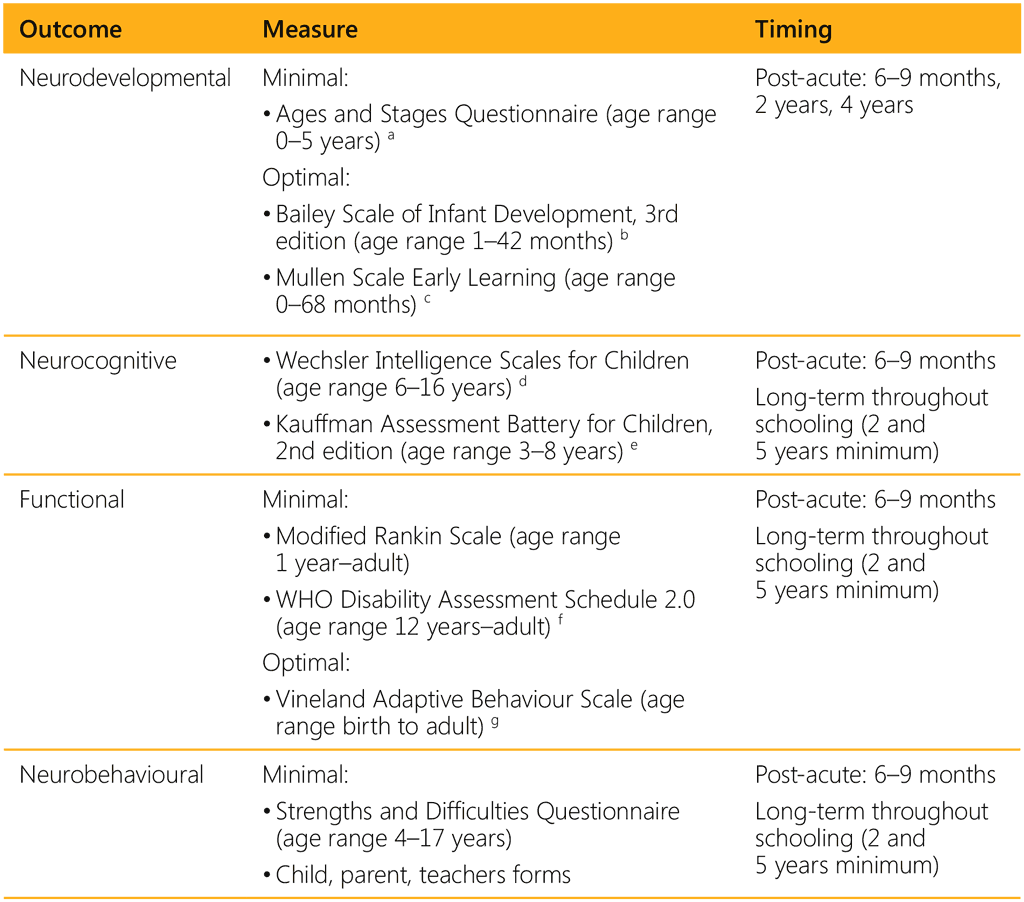
Note: these developmental assessment tools have not been formally adapted for use in low- and middle-income countries, and locally determined norms have not been developed. Interpretation of results requires careful consideration of the local context. A number of in-country locally developed screening tools are also available.
a Ages and stages questionnaire, 3rd edition. Baltimore, MD: Brookes Publishing; 2009.
b Bayley N. Scales of Infant and Toddler Development III (screening test). San Antonio, TX: Pearson; 2005.
c Torrance CW, editor. Mullen Scales of Early Learning. 1995.
d Wechsler Intelligence Scale for Children (WISC-IV), 4th edition. San Antonio, TX: Psychological Corporation; 2003.
e Kaufman Assessment Battery for Children 2. Circle Pines, MN: American Guidance Service; 2004.
f WHO Disability Assessment Schedule 2.0. Geneva: World Health Organization; 2010 (https://www.who.int/standards/classifications/international-classification-of-functioning-disability-and-health/who-disability-assessment-schedule).
g Sparrow SS, Cicchetti DV B DA. Vineland Adaptive Behavior Scales, 2nd edition. Minneapolis, MN: Pearson; 2005.
h http://www.sdqinfo.com.
Source: adapted from Davis AG, Nightingale S, Springer PE, et al. Neurocognitive and functional impairment in adult and paediatric tuberculous meningitis. 2019