Retour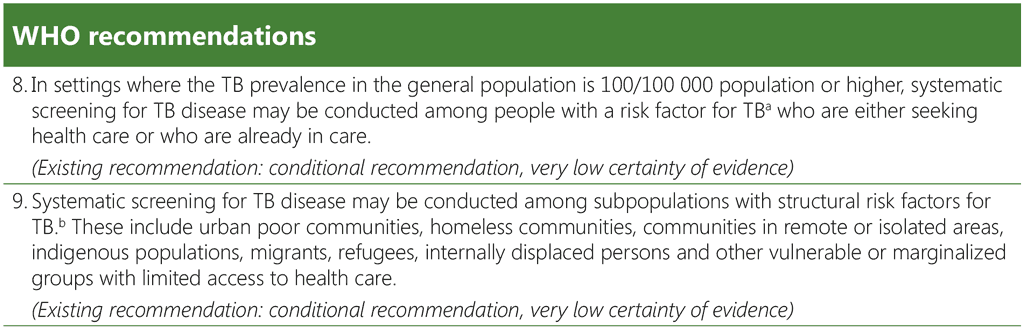
a Undernutrition is a recognized risk factor for TB, and malnourishment is listed as one of the key risk factors to consider for TB screening.
b Structural risk factors for TB also include food insecurity.
2.4.1 Justification and evidence
These recommendations are published in the 2021 WHO consolidated guidelines on tuberculosis. Module 2: screening – systematic screening for tuberculosis disease (12). People with undernutrition are at higher risk of TB (3). Populations with structural risk factors for TB are those who are at an increased risk of TB and of poor health outcomes from TB owing to structural determinants in their environment. Structural risk factors for TB include poverty; food insecurity; overcrowded and poorly ventilated conditions for living, working and gathering; and limited or no access to health care (147, 148).
Recommendation 8:
TB screening among people with undernutrition
A systematic review found that lower BMI is associated with an increased risk of TB, with an increase in TB incidence of 13.8% (95% CI: 13.4–14.2) per unit decrease in BMI within the range 18.5–30 kg/m² (6). There are multiple pathways by which undernutrition can increase the risk of TB, including cell-mediated immunity and micronutrient deficiency; also, other conditions (e.g. mental health and substance use disorders) can increase the risk of malnourishment and TB. A full list of other risk factors to consider for TB screening in settings with a TB prevalence of 100 per 100 000 population or higher is given in the WHO consolidated guidelines on tuberculosis. Module 2: screening – systematic screening for tuberculosis disease (12).
Recommendation 9:
TB screening among people with food insecurity
Observational studies conducted during 2013–2020 suggest that TB screening conducted among populations affected by structural risk factors may initially increase TB case notifications and decrease TB prevalence; however, all studies had a major risk of bias (12).
2.4.2 Implementation considerations
Screening among people attending health services should be conducted in addition to passive case-finding (i.e. proper triaging and evaluation of people seeking care who report signs or symptoms of TB). Passive case-finding should be done in all settings, and is particularly important among people who have risk factors for TB.
WHO also recommends systematic screening in other groups who are at high risk of exposure to TB or of progression to TB disease, or who have limited access to TB services. The following risk groups should always be systematically screened for TB: household and close contacts of people with TB, people living with HIV, people exposed to silica (mainly some miners), and people in prisons and penitentiary institutions (12).
Groups should be prioritized based on their risk of TB, the risk of poor treatment outcomes if diagnosis is delayed and the size of the risk group in a given setting. Although undernutrition and food insecurity are not an indication for TPT, some people in these populations (e.g. people with HIV and household contacts of people with TB) will be eligible for TPT. Details on eligibility for TPT are published in the WHO consolidated guidelines on tuberculosis. Module 1: prevention – tuberculosis preventive treatment, second edition (46).
Due to the inherent lack of access to health care experienced by people with structural risk factors, screening interventions would need to be extended into the communities where members of these populations live and work, to achieve effective reach and coverage. The list of potential populations affected by structural risk factors included in this recommendation is not exhaustive; hence, this recommendation may apply to other groups that have a high risk of TB and poor access to health care, including poor access to high-quality TB services.
There is no evidence about the effectiveness of different screening intervals; in the absence of such evidence, the choice of screening interval should be guided by feasibility. As far as possible, community screening should be combined with screening for other diseases or risk factors, and with health-promotion or social support activities and provision of adequate referral pathways to ensure linkage to care when indicated. Additional operational considerations for TB screening in refugee camps and among displaced populations are outlined in Tuberculosis prevention and care among refugees and other populations in humanitarian settings: an interagency field guide (149).
Further details on systematic screening for the different populations can be found in the WHO consolidated guidelines on tuberculosis. Module 2: screening – systematic screening for tuberculosis disease (12) and the accompanying operational handbook (150).