Feedback
This annex provides an overview of respiratory and non-respiratory specimens that can be used to diagnose TB in children and adolescents, with a short description for each, the age group in which they can be used, the minimum volume required for testing, and the optimal time of collection.
Table A3.1. Respiratory specimens

a hese values are the minimum recommended amount; larger volumes have higher bacteriological yields.
b Children with TB swallow sputum containing TB bacilli originating from the lungs, which then pass through the digestive tract, where they can be detected in stool samples. Stool is, therefore, regarded as a respiratory specimen for the diagnosis of TB.
Table A3.2. Non-respiratory specimens
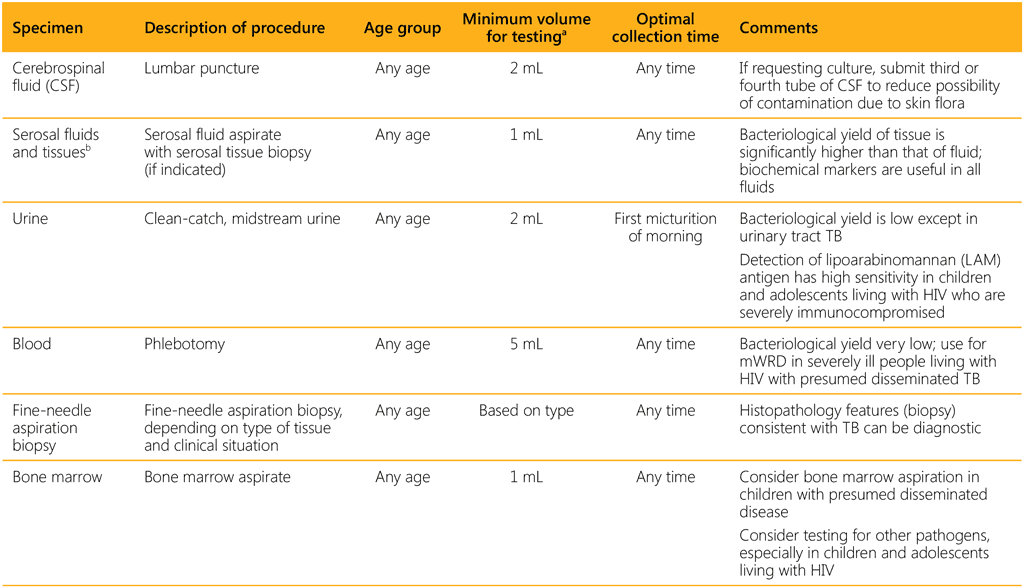
mWRD: molecular WHO-recommended rapid diagnostic test.
a These values are the minimum recommended amount; larger volumes have higher bacteriological yields.
b Serosal fluids include pleural, pericardial, peritoneal and synovial fluids.
Source: adapted from Management of drug-resistant tuberculosis in children: a field guide, 4th edition. Boston, MA: Sentinel Project for Pediatric Drug-resistant Tuberculosis; 2019.