Feedback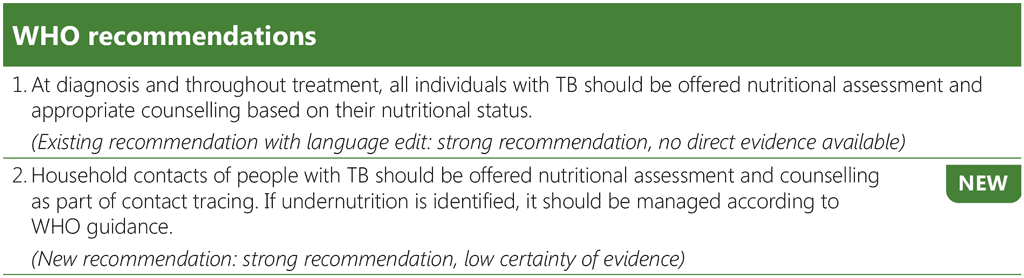
2.1.1 Justification and evidence
Undernutrition is a common condition among people with TB. A systematic review and meta-analysis of 53 studies involving 48 598 participants estimated that, globally, 48% of people with TB have undernutrition (2). Nutritional assessment and counselling are recognized as critical interrelated interventions in the pathway of tailored nutritional care (11, 16-18). Nutritional assessment is a prerequisite for identifying, preventing and managing undernutrition. Counselling is an interactive process, informed by the nutritional assessment; it informs the individual about the results of the nutritional assessment, helps to identify the individual’s needs and barriers to optimizing nutrition, provides information to the individual to address any nutritional issues identified and helps in developing a plan to ensure a healthy diet is maintained (17, 18).
In 2013, WHO recommended that all individuals with TB should receive nutritional assessment and counselling, and that their household contacts should receive nutritional screening and assessment in settings where household contact tracing is being conducted (11). WHO also recommends that all household contacts are systematically screened for TB (12). Assessing for unintended weight loss is already a part of symptom screening for household contacts of people with TB (12).
Recommendation 1:
Nutritional assessment and counselling of people with TB
This strong recommendation was originally developed during the guideline development process for the 2013 publication Guideline: nutritional care and support for patients with tuberculosis (11).
The systematic review conducted for PICO Question 1, on nutritional interventions for people with TB, also included assessment and counselling. The review did not identify any direct evidence on the effectiveness of assessment and counselling alone on improving outcomes in people with TB. However, it did identify studies that showed the benefit of nutritional interventions (e.g. high energy–protein food) to address undernutrition among people with TB, a large proportion of whom had undernutrition (19-28). More details on this evidence are provided in Section 2.2.1.
Nutritional assessment is an essential prerequisite for identifying undernutrition and for informing an appropriate nutritional intervention. Most studies identified by the systematic review described the nutritional status of participants; hence, it can be assumed that nutritional assessment was conducted. However, the impact of nutritional assessment alone on the outcomes of participants with TB was not measured. Two of the studies identified by the systematic review that mentioned nutritional counselling provided it to participants in both the intervention and control arms, so were unable to measure the benefits of nutritional counselling (25, 26). However, data from systematic reviews of nutritional counselling among other populations with undernutrition or at risk of undernutrition (e.g. people with cancer or older people) demonstrate that nutritional counselling may result in increased energy and protein intake, as well as an increase in body weight (29-31). Thus, it seems that nutritional counselling, tailored to the individual’s nutritional status, would also be of benefit to people with TB.
In a programmatic nested cohort study conducted as part of the Reducing Activation of Tuberculosis by Improvement of Nutritional Status (RATIONS) trial (described in Section 2.2.1), low baseline weight of people with TB was a predictor of TB mortality, whereas 5% weight gain in the first 2 months was protective against TB mortality (32). Thus, assessment of nutritional status at baseline and throughout treatment is important for monitoring clinical and nutritional recovery in people with TB, and nutritional assessment and counselling can play an important role in reducing mortality. Identifying and addressing undernutrition in people with TB may save lives and would be unlikely to give rise to any significant adverse events.
Qualitative interviews with people who have been treated for TB conducted to inform these guidelines indicated that assessment and counselling throughout treatment, in combination with nutritional interventions, were well received and were motivating (Web Annex D). Participants who did not receive nutritional counselling in combination with food support frequently sought advice from other sources; for example, from their peers or online (Web Annex D).
The GDG highlighted that nutritional assessment and counselling are essential for the provision of appropriate nutritional care. However, GDG members observed the absence of direct evidence on the impact of nutritional assessment and counselling alone on clinical outcomes of people with TB. They also noted the challenge of measuring the effectiveness of nutritional assessment and counselling on outcomes, separate from any other intervention to address undernutrition. Members further highlighted the challenges of designing studies on the impact of nutritional assessment and counselling alone among people with TB, given that they are considered the standard of care and there has been a strong recommendation on nutritional assessment and counselling since 2013 (which might explain the absence of data). The GDG also noted that studies that include assessment and counselling will also include these activities in the control arm (25, 26).
Based on the findings from the indirect evidence, the GDG agreed to retain the existing strong recommendation from the 2013 guidelines. The previous recommendation has been updated for clarity and to reflect the latest WHO-endorsed language.
Recommendation 2:
Nutritional assessment and counselling for household contacts of people with TB
The GDG noted that the recommendation from the 2013 guidelines on nutritional screening and assessment of household contacts should be replaced, primarily because it applied only to settings where contact tracing was being implemented. Given that there has been a strong recommendation for contact tracing since 2012, which is being scaled up in many countries, this conditionality was judged to be inappropriate (1, 12, 33).
The systematic review conducted for PICO Question 3, on nutritional interventions for household contacts, also included assessment and counselling. The review did not identify any direct evidence that measured the effectiveness of nutritional assessment and counselling on reducing TB incidence among household contacts. However, it did identify one trial – the RATIONS trial – which provided a source of indirect evidence on nutritional assessment and counselling for the GDG to consider (7).
The RATIONS trial (described in Section 2.2.1) was a cluster randomized controlled trial (RCT) that assessed the impact of food assistance on TB incidence among household contacts of people with TB. It estimated that the food assistance reduced the incidence of TB by 39%, regardless of baseline nutritional status. A high proportion (34%) of the household contacts had undernutrition. However, since all the household contacts in the intervention and the comparator arms received nutritional assessment as standard practice, the effect of assessment alone could not be determined. Similarly, all household contacts within the RATIONS trial were offered counselling as standard practice, so again the effect of counselling could not be determined. However, data from systematic reviews of nutritional counselling among other populations with undernutrition or at risk of undernutrition (e.g. people with cancer or older people) demonstrate that nutritional counselling may result in increased energy and protein intake, and an increase in body weight (29-31).
Nutritional assessment is a critical step for identifying different types and severity of malnutrition (e.g. mild, moderate or severe undernutrition or obesity); it provides an entry to care for tailored nutritional interventions, and an opportunity for advice on a healthy balanced diet as part of counselling and TB prevention. Based on studies demonstrating the impact of nutritional counselling on other populations, it may be concluded that nutritional counselling tailored to the severity of nutritional status would also be of benefit to household contacts of people with TB (29-31). The GDG noted that nutritional assessment and counselling of household contacts of people with TB are likely to be of more value to recipients if these initiatives are accompanied by nutritional interventions that are tailored according to degree of undernutrition. The GDG judged that if nutritional interventions appropriate to the severity of undernutrition are provided to household contacts who are identified as undernourished via the assessment, the benefits in terms of TB prevention could be moderate to large, as demonstrated by the RATIONS trial. It was also noted that nutritional assessment and counselling are not only critical for the provision of nutritional interventions but are also an important part of TB contact investigation and TB prevention activities. Identifying and addressing undernutrition, particularly severe undernutrition, in this high-risk population, may save lives and would be unlikely to give rise to any significant adverse events.
The overall certainty of evidence for nutritional assessment and counselling for household contacts of people with TB was downgraded twice, from high to low certainty, because of indirectness and because the RATIONS trial was a single trial in a single setting, with variability across subpopulations and with a population limited to household contacts of people with bacteriologically confirmed pulmonary TB.
As was the case for people with TB, it was noted that there might be challenges in designing trials to measure the effectiveness of nutritional assessment and counselling as standalone interventions to address undernutrition in household contacts of people with TB (which may explain the lack of evidence to support these interventions).
The review of background questions did not find any studies looking specifically at the resource implications, acceptability, feasibility or equity of assessment and counselling among household contacts of people with TB. However, interviews with TB survivors found that participants would have valued counselling conducted among their household members; they would also have valued receiving more information to clarify whom the nutritional support was for (Web Annex D). In the survey among representatives of MoHs, most participants responded that clinic staff would be supportive of providing nutritional interventions to household contacts (Web Annex D).⁶ As countries are scaling up activities for TB screening and TB preventive treatment (TPT) among household contacts of people with TB, GDG members acknowledged that nutritional assessment and counselling were likely to be feasible (although this may vary according to the context), and that capacity-building would be necessary in terms of staff numbers, expertise and equipment, which would come at an additional cost if countries are not already implementing the existing recommendation. The GDG judged that the intervention would probably increase equity because it would identify those households in need of assistance and help to reduce costs incurred by the household due to TB.
Based on the indirect evidence reviewed on the balance of benefits and harms, and the evidence on acceptability and feasibility, cost implications and equity, the GDG agreed to develop a strong recommendation on the assessment and counselling of household contacts of people with TB.
2.1.2 Subgroup considerations for people with TB and household contacts
These recommendations apply to all people with TB, and household contacts, including the subpopulations described in this subsection.
People with comorbidities
People with TB and their household contacts may have other comorbidities or TB risk factors (e.g. HIV, diabetes, smoking, mental health conditions and alcohol or drug use), which may have their own nutritional implications and should be considered during nutritional assessment and counselling. Nutritional counselling, advice and support may need to be adjusted depending on the degree of undernutrition and the specific nutritional requirements of people with these comorbid conditions. Close collaboration between health care providers is also important to assure comprehensive care.
Pregnant women, infants, children and older people
Nutritional assessment and counselling for pregnant women, infants, children and older people may require additional expertise. Coordination with specialist services (e.g. maternal, child health and nutrition services) may be advisable to optimize resource use, training and mentoring. In some low- and middle-income countries, mother and child health services are supported by international organizations such as the United Nations Children’s Fund (UNICEF). Such organizations have specific expertise and can support policy change, provision of anthropometric supplies and capacity development of the government health workforce, including community health workers, for the assessment and provision of nutritional interventions for pregnant women, infants and children.
Guidance on nutritional assessment and management for infants and children below 5 years is found in the WHO guideline on the prevention and management of wasting and nutritional oedema (acute malnutrition) in infants and children under 5 years (34). Guidance on nutritional assessment and management for pregnant women is found in WHO recommendations on antenatal care for a positive pregnancy experience (35). Guidance on nutritional counselling for older people can be found in Integrated care for older people: guidelines on community-level interventions to manage declines in intrinsic capacity (36).
2.1.3 Implementation considerations for people with TB and household contacts
Assessing nutritional status
WHO defines undernutrition according to anthropometric assessment, as described in Table 1, however, other methods of assessment include biochemical, clinical and dietary assessment which are also important for a comprehensive understanding of an individual’s nutritional status at baseline and throughout TB treatment.
Anthropometric assessment can include:
- measurement of body mass index (BMI) in adults aged over 19 years;
- BMI-for-age Z-score in children and adolescents aged 5–19 years;
- weight-for-age Z-score in children aged below 5 years; and
- weight-for-length or weight-for-height Z-score, mid-upper arm circumference (MUAC) and/or a clinical assessment for the presence of nutritional oedema to identify children aged below 5 years with undernutrition.
To calculate BMI, weight and height need to be measured. Additional information on nutritional assessment, including accurate measurement of height and weight, on conversion to BMI and to WHO standardized Z-scores, and on the management of undernutrition will be available in the undernutrition section of the latest edition of the WHO operational handbook on tuberculosis. Module 6: tuberculosis and comorbidities, and is available in related WHO guidance (34-40).
Definition of undernutrition
In the past, the term malnutrition (e.g. moderate acute malnutrition and severe acute malnutrition) has been used interchangeably with the term undernutrition. However, it is now recognized that malnutrition also incorporates excesses in nutrient intake and imbalance of essential nutrients or impaired use of nutrients. The term undernutrition is commonly referred to as mild, moderate or severe thinness in adults, and as wasting, oedema and stunting in children, and it can include micronutrient deficiency (34, 41). In the interests of clarity and uniformity in language across the different populations, this document uses the term “undernutrition”, rather than “thinness” or “malnutrition”.
The anthropometric thresholds or markers for mild, moderate and severe undernutrition are defined in Table 1. More information on assessment of nutritional status will be available in the undernutrition section of the latest edition of the WHO operational handbook on tuberculosis. Module 6: tuberculosis and comorbidities.
Table 1. Definitions of mild, moderate and severe undernutrition by age group
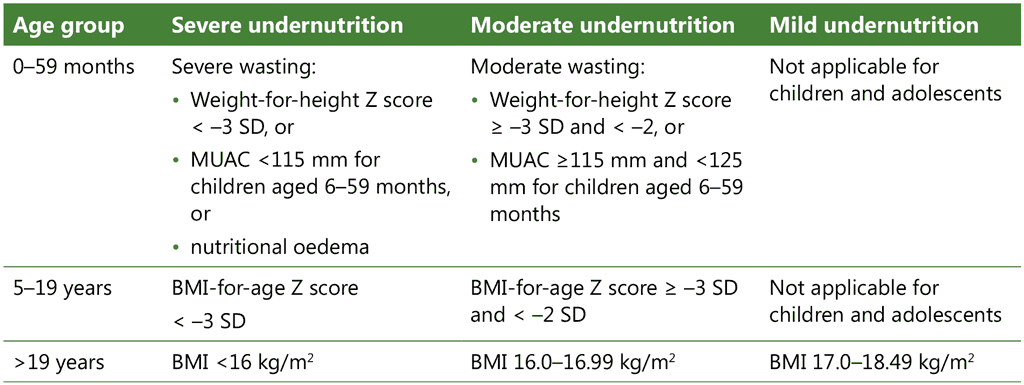
BMI: body mass index; MUAC: mid-upper arm circumference; SD: standard deviation.
If undernutrition is identified, consideration should be given to any underlying physiological causes of undernutrition that might need to be addressed (e.g. HIV, diabetes, helminth infections or chronic diarrhoeal diseases). Wherever possible, assessment should also include questions to assess household food insecurity (42).
Components of nutritional counselling
Nutritional counselling is a two-way interaction between a trained counsellor or health worker and one or more individuals (e.g. people with TB, household contacts, mothers or other caregivers of children). The process involves listening to concerns, discussing questions, sharing information about good nutrition practices and collaboratively identifying barriers to achieving food security and good nutrition, as well as supporting the identification of actions that individuals and families can take to address those barriers. Nutritional counselling should be sensitive to socioeconomic barriers experienced by the household. It may include advice on increasing daily energy and protein intake and on a healthy balanced diet, as well as meal plans composed of affordable, nutritious, locally available and culturally acceptable foods. Nutritional counselling should also emphasize the role of nutrition as a medical intervention in improving TB treatment outcomes and preventing TB among household contacts. Depending on the resources and time available, counselling may need to be simplified. Locally developed standardized nutritional counselling materials, for both the health worker and the people affected by TB, will help to simplify the delivery of nutritional counselling.
Equipment and human resources requirements
The costs of nutritional assessment and counselling will depend on the specific model of care deployed – in the health facility or in the community. If countries are not already implementing household contact tracing or other nutritional interventions, introducing and sustaining nutritional assessment and counselling services might require additional investment.
Additional staff or community health workers may be required to conduct nutritional assessment and provide nutritional counselling, and to ensure that TB case-finding activities are not compromised. Health workers will need to have access to standard equipment and charts to allow for anthropometric measurement according to age, as well as standard operating procedures and training to provide nutritional assessment and counselling (43). Health facilities are usually equipped with weighing scales (for infants, children and adults) and ideally should be equipped with a stadiometer and a tape measure for measuring MUAC. The development of standard nutritional counselling materials to improve health literacy may also be useful.
Delivery of nutritional assessment and counselling services
Nutritional assessment and counselling among household contacts can be included in the workup for contact tracing and eligibility for TPT, just after TB disease is diagnosed in a person in the household. Nutritional assessment and counselling should be implemented in all settings, regardless of food insecurity.
Key considerations to maximize coverage are the provision of financial support to household contacts to enable travel to a health facility, or task shifting to community health workers to conduct nutritional assessment and counselling in the home (44, 45). While carrying out nutritional assessment and counselling activities, all measures should be taken to minimize stigmatization; for example, protecting the confidentiality of personal data, maintaining privacy and receiving informed consent from the person with TB and the household members, according to programme guidelines.
6 Stephanie Law, McGill University, unpublished data, 5 June 2024.