Feedback
To achieve the goals of successful TB treatment in children and adolescents, clinical and programmatic management should include the following components and skills:
- management of TB medicines;
- recognizing clinical signs indicating the need for urgent care;
- managing comorbidities, including undernutrition;
- managing adverse events;
- implementing infection control practices;
- educating patients and their families and caregivers;
- providing psychological and socioeconomical support;
- involving family members in decisions regarding treatment;
- supporting treatment adherence;
- (reverse) contact investigation and providing TPT to other eligible family members;
- recording and reporting to monitor notifications and treatment outcomes;
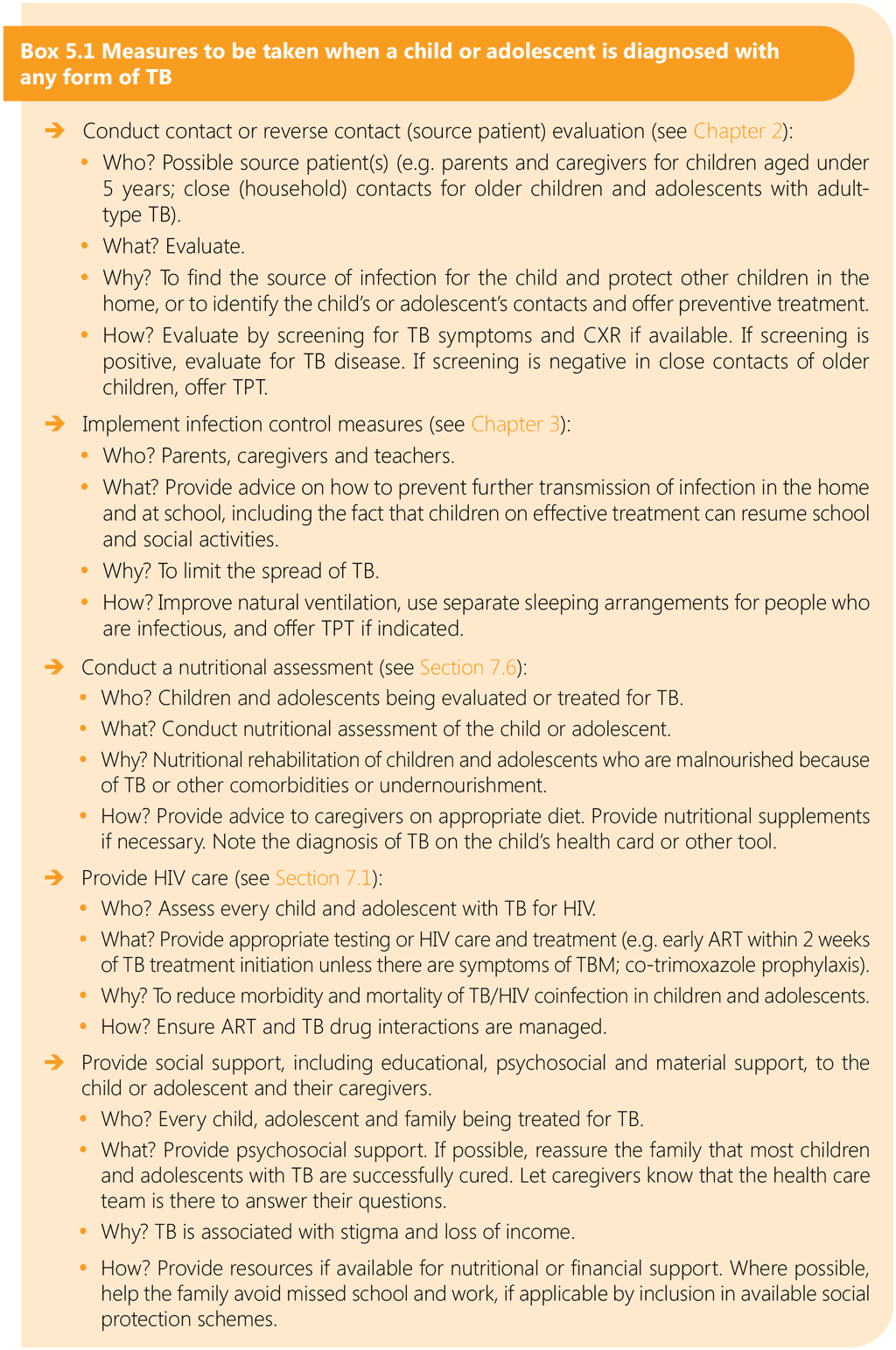
Management of TB in children and adolescents should include contact investigation, considerations of infection control, nutritional evaluations, psychosocial support, and HIV assessment and care (Box 5.1).